Why the Face Shows Redness in the First Place
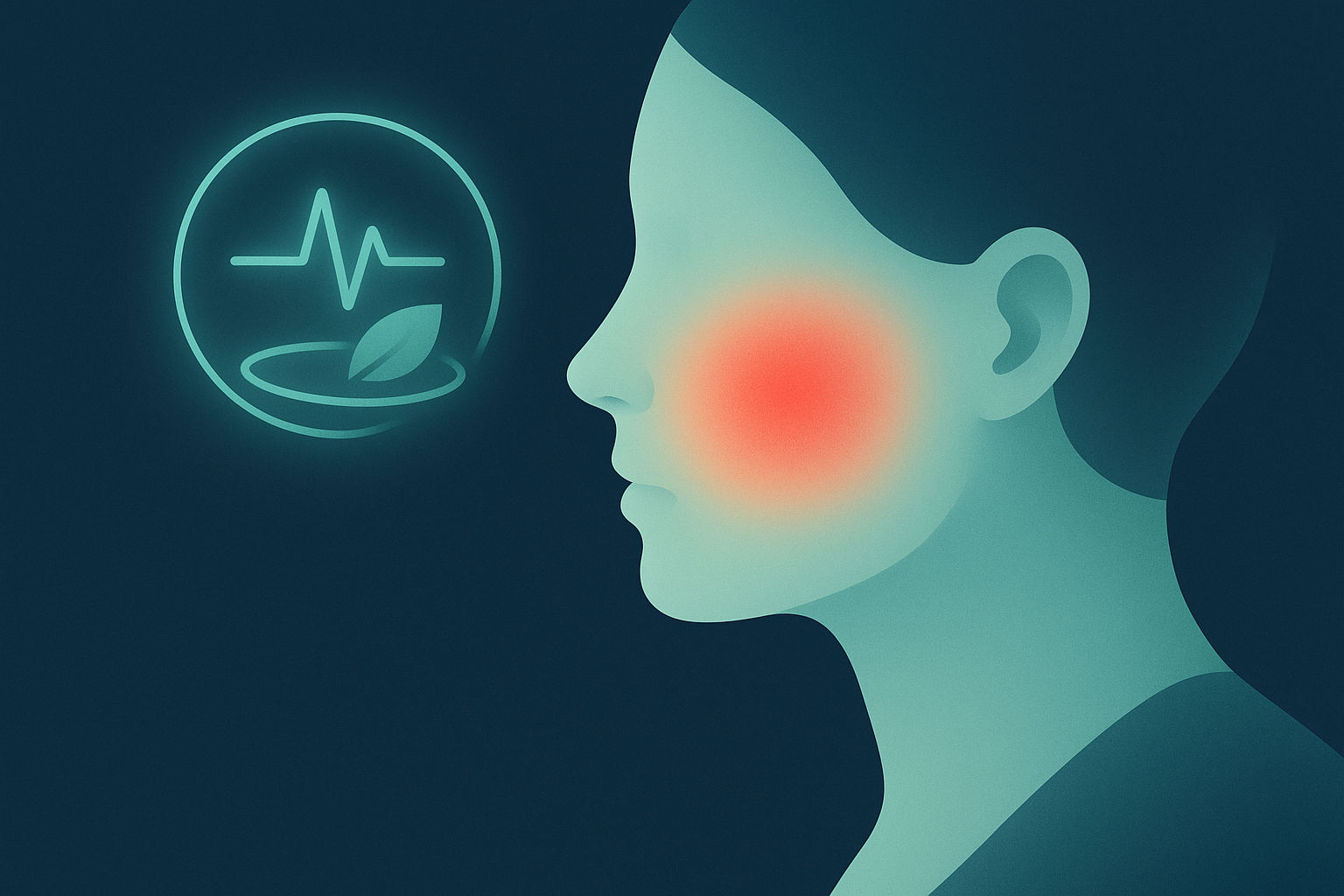
Your face is one of the most vascular surfaces of your body. A dense network of tiny blood vessels sits close to the surface, especially across the cheeks, nose, and the central T-zone — which is exactly why color changes show up there before they're noticeable anywhere else. When those vessels dilate, more blood flows near the skin and the area reads as warmer and redder.
That redness isn't random. It's a visible output of internal state. Blood flow to the skin shifts with temperature, emotion, hormones, what you've eaten, and how your nervous system is behaving in the moment. In other words, facial color is a high-information signal — it carries data about physiology that's otherwise invisible.
This is the principle behind facial inference. Color, texture, and evenness across specific regions of the face correlate with physiological state. Soma operationalizes this by reading regional skin tone in CIELAB color space across 12 facial zones, expressing what it sees as a deviation from a population baseline rather than a raw verdict. Redness, in that framework, becomes a trackable signal rather than a one-off observation.
The Stress Connection: Flushing and the Nervous System
Acute stress activates the sympathetic nervous system — the 'fight or flight' branch — which can trigger rapid vasodilation in the face. That's the physiology behind a stress flush: the heat and pink that rises in the cheeks during a tense meeting or a difficult conversation. Cortisol and adrenaline shift blood flow patterns, and the face, with its dense surface vasculature, is where it shows first.
Chronic stress works differently. Sustained stress is associated with low-grade inflammation and a compromised skin barrier, both of which can leave skin more reactive and prone to persistent ruddiness. Research on the skin barrier shows that psychological stress can slow barrier recovery, meaning skin stays more sensitive and reacts more easily to everyday triggers.
This is why a single red moment and a recurring pattern of redness tell different stories. A flush that comes and goes with your mood is one thing; a baseline that's been creeping redder across weeks is another. Multi-region color combined with geometric features forms what we think of as a state signature associated with stress — and longitudinal tracking is what separates a momentary reaction from a meaningful trend. Soma's stress-related signals are still under active validation, so they're best read as cues to pay attention, not diagnoses.
The Diet Connection: Foods That Turn Up the Flush
Diet influences facial redness through several mechanisms — vasodilation, histamine, and inflammation. Some of the most common dietary contributors include:
- Alcohol — a direct vasodilator that widens facial blood vessels and can leave a lingering flush, especially around the cheeks and nose.
- Spicy foods — capsaicin activates heat receptors that trigger vasodilation and visible warmth.
- Hot beverages and high heat — temperature alone can dilate surface vessels independent of any ingredient.
- High-histamine foods — aged cheeses, cured meats, fermented foods, and some wines can amplify redness in people who are sensitive.
- High-glycemic, ultra-processed diets — associated with systemic inflammation that may show up as duller, less even, or ruddier skin over time.
On the other side, dietary patterns rich in omega-3 fatty acids, colorful polyphenol-rich produce, and adequate hydration are associated with a calmer, more resilient skin barrier. Nutrients like vitamin C (collagen support), zinc, and the antioxidants in leafy greens and berries are studied in the context of skin barrier function and even tone.
The tricky part is that diet-driven redness is often delayed and cumulative — the glass of wine tonight, the inflammatory week, the slow drift. That lag is exactly why noticing a pattern matters more than reacting to a single meal.
Stress vs. Diet: Reading the Pattern, Not the Moment
Because both stress and diet route through similar pathways — vasodilation and inflammation — the redness they produce can look similar in a mirror. What distinguishes them is timing, location, and trajectory.
Stress flushing tends to be fast, tied to a moment or mood, and often concentrated across the cheeks and neck. Dietary flushing tends to track with specific triggers — appearing after alcohol, spice, or heat — and high-histamine reactions can show up more diffusely. Inflammation-driven ruddiness from an ongoing dietary pattern tends to build slowly and stick around.
This is where frequent, frictionless observation earns its keep. A single look tells you little; a series of readings reveals whether redness spikes on high-stress days, follows certain meals, or is trending in a particular direction. Soma is designed to help you notice these trends — reading regional color from a single selfie in about a second, attaching a confidence score to each reading, and letting repeat scans build a trajectory. It's a wellness and self-awareness layer, not a medical measurement, but a consistent record is what turns 'my face looks red' into a useful, personal pattern.
What to Do With What Your Face Reveals
The point of reading redness isn't alarm — it's awareness that you can act on. Once you can see a pattern, you can run small, honest experiments:
- Connect redness to context. Note what preceded it: a stressful stretch, alcohol, spicy food, a hot room, poor sleep. Patterns emerge faster when you log the situation, not just the symptom.
- Adjust one variable at a time. Cut back on a suspected dietary trigger for a couple of weeks and watch whether your baseline calms. Single-variable changes make cause and effect readable.
- Support the skin barrier from the inside. Omega-3s, hydration, polyphenol-rich produce, and steadier blood-sugar meals are all associated with calmer, more resilient skin.
- Address stress at the nervous-system level. Sleep, breathwork, movement, and recovery time influence the sympathetic activation behind flushing.
Soma fits here as a complementary tool — a frictionless way to capture the signal frequently and flag where deeper attention may be warranted. Persistent, worsening, or symptomatic redness is a reason to see a qualified clinician; facial inference is for general wellness and self-awareness, not a substitute for medical evaluation.
Frequently Asked Questions
Does facial redness mean I'm stressed?
Not necessarily. Facial redness can be a signal of stress because acute stress triggers vasodilation in the face, but it can also come from diet, heat, alcohol, exercise, hormones, or skin conditions. The key is the pattern: redness that spikes during tense periods and fades afterward is more likely stress-related, while redness tied to specific foods or that builds slowly may point elsewhere.
Which foods most commonly cause facial flushing?
The most common dietary triggers are alcohol and spicy foods, both of which directly dilate facial blood vessels, along with hot beverages and high heat. High-histamine foods like aged cheese, cured meats, and fermented products can amplify redness in sensitive people, and consistently high-glycemic, ultra-processed diets are associated with inflammation that may show as ruddier skin over time.
How can I tell if my redness is from stress or diet?
Look at timing, location, and triggers. Stress flushing is usually fast, tied to a moment or mood, and concentrated on the cheeks and neck. Diet-related redness typically follows specific things like alcohol, spice, or heat, while inflammation-driven ruddiness builds gradually. Tracking redness alongside context over several days or weeks makes the difference clear.
Can tracking my face over time actually help with redness?
Yes — because redness is often about patterns, not single moments. Repeat observations can reveal whether your skin reddens on high-stress days, after certain meals, or whether your baseline is trending in one direction. Soma supports this by reading regional facial color from a selfie and using repeat scans to build a trajectory, helping you connect redness to its likely causes.
What does Soma's face scan actually read when it comes to redness?
Soma maps facial landmarks and analyzes regional skin tone in CIELAB color space across 12 facial zones, expressing each reading as a deviation from a population baseline with a confidence score. Color signals are associated with stress, skin condition, and other wellness states, but these signals are exploratory and still validating — only Soma's age-inference model is fully validated. It's a wellness tool, not a diagnosis.
What diet changes may support calmer, less red-looking skin?
Dietary patterns rich in omega-3 fatty acids, colorful polyphenol-rich produce, and adequate hydration are associated with a more resilient skin barrier. Nutrients like vitamin C, zinc, and antioxidants from leafy greens and berries are studied in the context of skin barrier function and even tone. Reducing alcohol and high-glycemic, ultra-processed foods may also help, though individual responses vary.