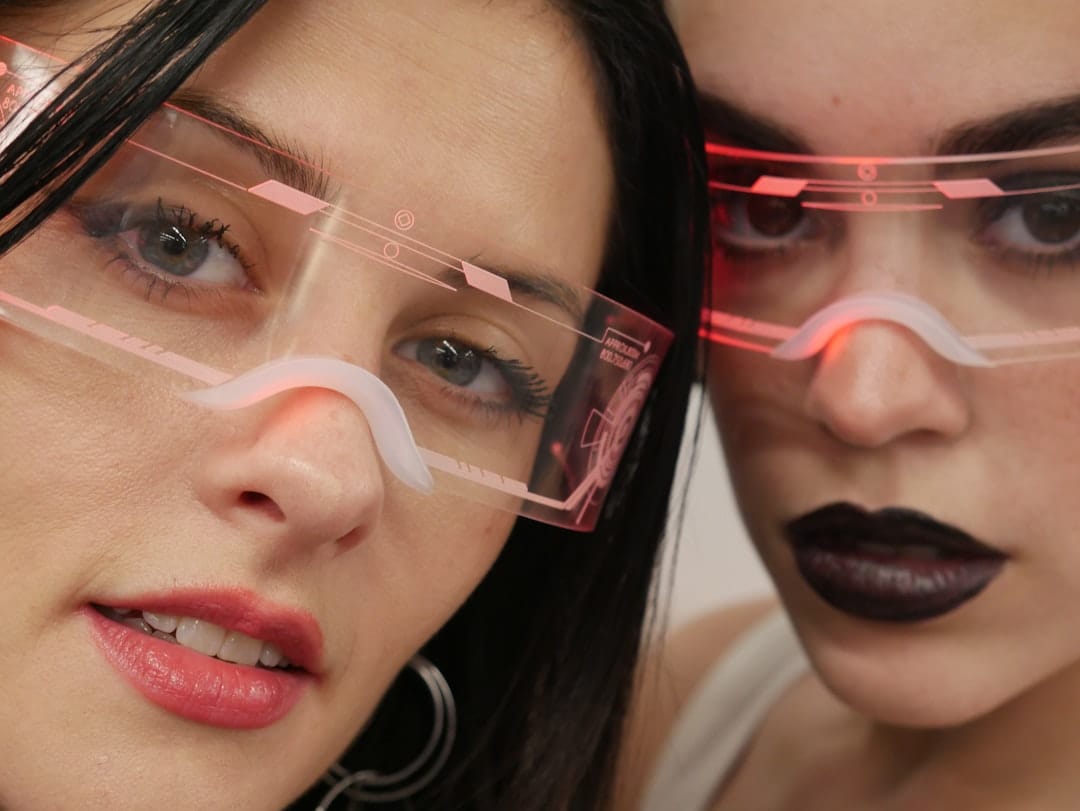
What Facial Inference Actually Is
Facial inference is the practice of reading structured, measurable signals from a face — not interpreting expressions or moods, but quantifying the color, texture, and geometry of skin and features. The premise is grounded in physiology: the face is one of the most vascularized, exposed, and information-dense surfaces on the body, and it changes in ways that correlate with underlying physiological state.
A modern facial-inference engine doesn't 'look' at a face the way a person does. It maps hundreds of precise landmarks, isolates distinct anatomical regions, and extracts numeric measurements from each — often in a perceptual color space designed to mirror how human vision registers difference. The output isn't a vibe or an impression; it's data.
Soma operationalizes this by mapping 478 facial landmarks, analyzing 12 anatomical regions (under-eye and eyelid zones, cheeks, lips, forehead, T-zone, jawline, and chin), and extracting 85 biomarker measurements in CIELAB color space — all from a single front-camera photo in about 1.1 seconds. The goal is wellness self-awareness, not a medical verdict.
Why the Face Carries Wellness Signals
The face works as a high-information surface for a few converging reasons. Its skin is thin and richly supplied with blood vessels, so changes in circulation and tone show up visibly. It's chronically exposed to light, so cumulative texture changes accumulate there first. And its underlying structure is consistent enough across people that small deviations become measurable against a reference.
Research across dermatology, sleep, and perception science supports the idea that specific regions track specific states:
- Periorbital (under-eye) zones — color and contrast here are associated with recovery and rest state.
- Cheeks and regional skin tone — evenness and color distribution reflect skin condition.
- Lips and peri-oral areas — color and texture features are being explored as hydration-related signals.
- Multi-region color plus geometry — combined, these form a 'state signature' associated with stress and overall wellness state.
None of this means the face delivers a diagnosis. It means the face is a legitimate, non-invasive place to notice signals — the same way a flushed face or tired eyes communicate something real, just measured with far more precision and consistency.
How the Science Turns a Selfie Into Signals
The pipeline matters as much as the premise. A credible facial-inference system has to solve three problems: where to look, what to measure, and how confident to be.
Where to look. Landmark detection segments the face into anatomically meaningful regions, so a measurement from the under-eye zone is never confused with one from the cheek or jawline. This regional discipline is what separates inference from guesswork.
What to measure. Instead of raw pixel values, signals are extracted as color and texture features and then expressed as deviation from a population baseline — z-scored against a reference distribution. So a reading tells you how you compare, not just an absolute number that's hard to interpret in isolation.
How confident to be. Every signal carries a confidence score tied to image quality, landmark detection, and how visible each region is. The system reports uncertainty rather than faking precision — if the lighting is poor or a region is obscured, it says so. And because scans are frictionless, they can be repeated over time, turning one-off snapshots into trajectory analysis that's far more meaningful than any single reading.
What's Validated vs. What's Still Being Researched
Honesty about validation status is central to doing this responsibly. Different signals sit at very different levels of scientific maturity, and good content should never blur that line.
- Age inference is validated against objective ground truth at r = 0.94 — this is the anchor result and the strongest claim the science currently supports.
- Recovery and dermatological/skin signals are deployed and actively validating.
- Stress and wellness state are under active validation.
- Nutrient-related and hydration signals are in active research.
This tiering is a feature, not a hedge. It means a reading on recovery, stress, or hydration should be treated as an exploratory wellness signal — something to notice and track — rather than a measurement to act on as fact. Facial inference is a complementary, non-invasive layer designed to flag where deeper attention may be warranted. It does not replace lab tests, sensors, or clinicians.
The Skin–Nutrition Connection on Your Face
One of the most compelling frontiers in facial inference is the link between what you eat and what your skin shows. The connection is well established in nutrition and dermatology research, even if facial measurement of it is still emerging.
Specific mechanisms make the face a plausible window into nutrition:
- Carotenoids from colorful produce (think carrots, tomatoes, leafy greens) accumulate in skin and are associated with a warmer, more even tone in research on skin coloration.
- Omega-3 fatty acids and dietary fats support the skin barrier, which influences texture and how skin holds moisture.
- Polyphenols and antioxidants are associated with skin's resilience to oxidative and environmental stress.
- Hydration and electrolyte balance can be reflected in lip and peri-oral texture and color.
This is where Soma's angle becomes practical: by reading color- and texture-derived markers and tracking them over time, the scan can surface trends and then match recipes to what your face reveals — nudging toward foods associated with the signals you're tracking. It's framed for general wellness, not as a claim that any food will fix a reading. The point is awareness: noticing the conversation between your plate and your skin.
Frequently Asked Questions
What is facial inference for wellness?
Facial inference for wellness is the practice of extracting measurable signals — color, texture, and geometry — from a facial photo and relating them to physiological state. It quantifies things like under-eye color or skin evenness against a population baseline to surface wellness trends, not medical diagnoses.
How accurate is facial inference?
Accuracy varies by signal. Soma's age-inference model is validated against objective ground truth at r = 0.94, its strongest result. Other signals — recovery, skin, stress, hydration, and nutrition — are at earlier stages of validation or active research and should be treated as exploratory wellness signals.
Can a face scan diagnose health conditions?
No. Facial inference is a wellness and self-awareness tool, not a diagnostic device. It surfaces signals and trends to help you notice patterns and decide where deeper attention may be warranted. It does not detect, diagnose, or treat any medical condition and does not replace lab tests or clinicians.
What can your face reveal about your nutrition?
Research links nutrients to visible skin traits: carotenoids from colorful produce are associated with warmer, more even tone; omega-3s support the skin barrier and texture; and hydration can show in lip and peri-oral features. Facial inference explores these as trends, not as measurements of nutrient levels.
How does Soma read signals from a single selfie?
Soma maps 478 facial landmarks across 12 anatomical regions and extracts 85 biomarker measurements in CIELAB color space, all from one front-camera photo in about 1.1 seconds. Results are expressed as deviation from a population baseline, each with a confidence score reflecting image quality.
Why are results shown as a comparison to a baseline?
Raw color or texture values are hard to interpret alone. Expressing readings as a z-scored deviation from a balanced population baseline tells you how you compare to a reference distribution, which is more meaningful — especially when repeated scans let you track your own trends over time.